
How to Save Money Fast: The Proven Habit That Saved Me $287 in a Month

If you’re trying to figure out how to save money fast, you should know my wake-up call wasn’t a sudden financial catastrophe. There was no catastrophic engine failure or an emergency room visit. Instead, it was a quiet, creeping dread at the grocery store checkout. Watching the total climb past what I’d mentally budgeted, feeling that familiar knot of financial stress tighten in my stomach—that was the moment. I was a prime example of someone living the modern paycheck to paycheck reality. Like millions, I was earning a decent income, yet my bank account was a testament to a life lived on a financial treadmill. The relentless pressure of the current economic climate, characterized by stubborn inflation rates and a rising cost of living, meant my money was losing its purchasing power faster than I could earn it. My modest salary, once comfortable, now felt insufficient to cover essentials, let alone get ahead on my nagging consumer debt and student loans.
The Problem of Invisible Leaks
The culprit wasn’t a lack of income, but a lack of awareness. My finances were being eroded by “daily drips.” These were small, seemingly harmless expenditures like a $6 coffee, a $15 lunch delivery, or a $2 mobile game purchase. As a result, these micro-transactions were invisible leaks sinking my financial ship. They contributed to a constant state of financial anxiety and made goals like building an emergency fund seem like a distant dream. I knew I needed more than just another budget; I needed a fundamental mindset shift.
Savvix: Your First Step to Financial Stability
Calculate your “survival number”—the absolute minimum you need for housing, utilities, and food for one month. Knowing this number is the first step to building a proper safety net and achieving financial stability.
My History of Failed Budgets: The Perfectionism Trap

Before my breakthrough, my digital graveyard was littered with the ghosts of failed budgets. My first attempt was the classic, hyper-detailed spreadsheet, a masterpiece of financial planning. However, the sheer effort of manual expense tracking for every single purchase led to immense decision fatigue. After two weeks, I gave up. Next, I tried zero-based budgeting, where every dollar is assigned a job. While brilliant in theory, it was too rigid for my variable income from freelance work. For instance, one unexpected expense would throw the entire system into chaos, triggering the “all-or-nothing” failure mindset. I even tried a low-tech cash “envelope system,” which proved impractical in an age of digital banking. A third, more insidious failure was the “mental budget”—the foolish attempt to track everything in my head. This is the most common trap of all, leading to a complete disconnect between perceived spending and reality.
Why Willpower Isn’t Enough
The core issue was my approach. I was relying on willpower, not systems. The psychology of money teaches that willpower is a finite resource. Therefore, you can’t rely on it to fight thousands of daily spending temptations. My perfectionism was my undoing. I didn’t need a more restrictive system; I needed a smarter, more behavior-focused one that could adapt to real life. True financial literacy isn’t just about spreadsheets. Instead, it’s about understanding your own habits, biases, and psychological triggers. It’s about building systems that make good decisions the easy decisions. I had to accept that my brain was not a calculator and that a successful budget had to be a forgiving, flexible tool, not a rigid prison. It needed to be a system that embraced imperfection and focused on consistent progress over time.
Savvix: Disarm Your Negative Financial Habits
Identify the #1 psychological barrier from your past budgeting attempts (e.g., “fear of looking at my balance,” “guilt after overspending”). Write it down. Acknowledging it is crucial to disarm its power over your financial habits.
The Epiphany: Discovering the “Weekly Money Sweep”

The solution came not from a finance guru, but from the world of agile project management. Instead of a massive, upfront plan, agile focuses on short, iterative cycles and continuous improvement. I decided to apply this to my finances. Consequently, I created a system of “agile personal finance.” I stopped trying to predict and control every dollar for the month ahead. Instead, I created a simple, repeatable habit: the “Weekly Money Sweep.” The philosophy was to shift from a restrictive mindset to a proactive, empowered one. This transformed budgeting from a chore of deprivation into a weekly game of financial recovery and gamification of savings. Every Sunday, I’d become a financial detective, reviewing the past week’s spending to find the “leaks.”
A New Habit for How to Save Money Fast
This was a profound mindset shift. It was no longer about what I had lost, but about what I could find and save. This process is grounded in the principles of behavioral finance. Specifically, it works by making your financial data visible and actionable in near real-time. Instead of a monthly post-mortem full of guilt, I was making small, data-driven decisions every single week. The “aha!” moment was realizing that saving money wasn’t about the money I didn’t spend. In fact, it was about the money I consciously reclaimed. This removed the shame and replaced it with a sense of control and accomplishment, fostering a positive money mindset. This proactive approach was the key to building a sustainable financial habit that finally delivered results. In addition, it led to true financial empowerment, making me the active driver of my financial life, not just a passenger.
Savvix: Schedule Your New Money Routine
Open your calendar right now. Schedule a recurring 15-minute appointment for every Sunday morning. Title it “My Weekly Money Sweep.” Make it a non-negotiable part of your routine.
Gearing Up: The Only Two Tools You Need for This Habit

This entire system is built on a foundation of modern financial technology. Forget complicated spreadsheets. You only need two essential tools to make the “Weekly Money Sweep” effortless and effective. First is a top-tier budgeting app. A good app leverages AI-powered insights to do the heavy lifting. For instance, platforms like YNAB, Copilot Money, or Monarch Money offer automated expense categorization and valuable analytics on your spending patterns and net worth tracking.
Choosing Your Financial Toolkit
When choosing one, ask yourself some key questions. Does it sync reliably with my accounts? Can I create custom tags for my “leaks”? What is its privacy policy? Some of these apps have a subscription fee. However, the clarity they provide is an investment that pays for itself. The second, and equally critical, tool is a High-Yield Savings Account (HYSA). Leaving your savings in a traditional bank account is a losing battle against inflation. HYSAs, typically offered by online banks, provide significantly higher interest rates (APY). This allows your money to grow through the power of compound interest. Even small, regular deposits will grow exponentially faster in an HYSA. For this reason, it’s a crucial tool for wealth building. The psychological benefit is also huge, as it creates a clear boundary between your daily spending money and your serious savings, reducing temptation. Ultimately, these two fintech solutions work in perfect harmony to provide the data for your audit and a powerful destination for your reclaimed funds.
Savvix: Supercharge Your Savings Strategy
Go to a reputable financial review site (like NerdWallet or Bankrate) and compare the top 3 HYSAs. Choose one and complete the online application today. It takes less than 15 minutes to take a massive step in your savings strategy.
The Sunday Ritual: A Step-by-Step Guide to Your First Sweep
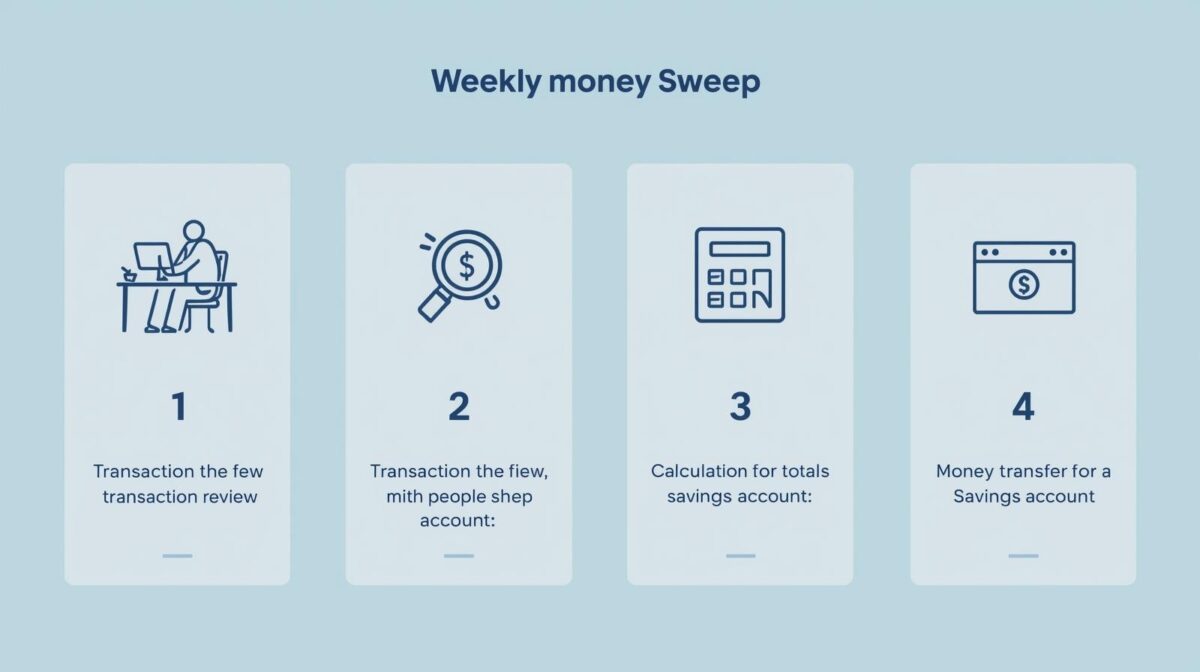
To make this habit stick, I transformed it from a chore into a positive financial ritual. Here’s my detailed, four-step process. 1. Create the Right Environment (3 Mins): First, I sit down on Sunday morning with coffee and approach it with a calm, curious mindset. This isn’t about judgment. In reality, it’s a moment of financial self-care and data analysis. 2. Identify and Tag the Leaks (7 Mins): Next, I scroll through the last seven days of transactions. I use tags like `#impulse-buy`, `#convenience-food`, `#boredom-shopping`, or `#forgotten-subscription`. This builds a powerful dataset of my unique spending patterns. 3. Calculate the “Reclaimable” Total (2 Mins): Then, I filter by my “leak” tags and tally up the total. I see it as the “score” for the week’s game. 4. Execute the Immediate Transfer (3 Mins): Finally, this is the most critical step. I immediately open my mobile banking app and transfer that exact total to my HYSA. The immediacy provides powerful behavioral reinforcement. In short, it hardwires the connection between awareness and positive action.
Troubleshooting Common Pitfalls
However, simple guides often ignore common pitfalls. Here’s how to troubleshoot: Pitfall #1: Feeling Guilty. If you see a high number, don’t get discouraged. Instead, reframe it: “Wow, look how much power I have to improve my situation this week!” Pitfall #2: Forgetting to do it. Link this new habit to an existing one. For example, “I will do my Money Sweep while my first cup of coffee brews every Sunday.” Pitfall #3: The number is too small. If you only find $10 to sweep, that’s a huge win! It means you’re already spending more consciously. The goal is building the habit, not hitting a high score. Therefore, consistency is far more important than the amount, especially in the beginning.
Savvix: Claim Your First Recurring Win
During your first sweep, identify just one recurring subscription you can eliminate. Go into your phone’s settings or the company’s website and cancel it immediately. This is an instant, recurring win.
My Spending Confessions: Where My Money Was Really Going
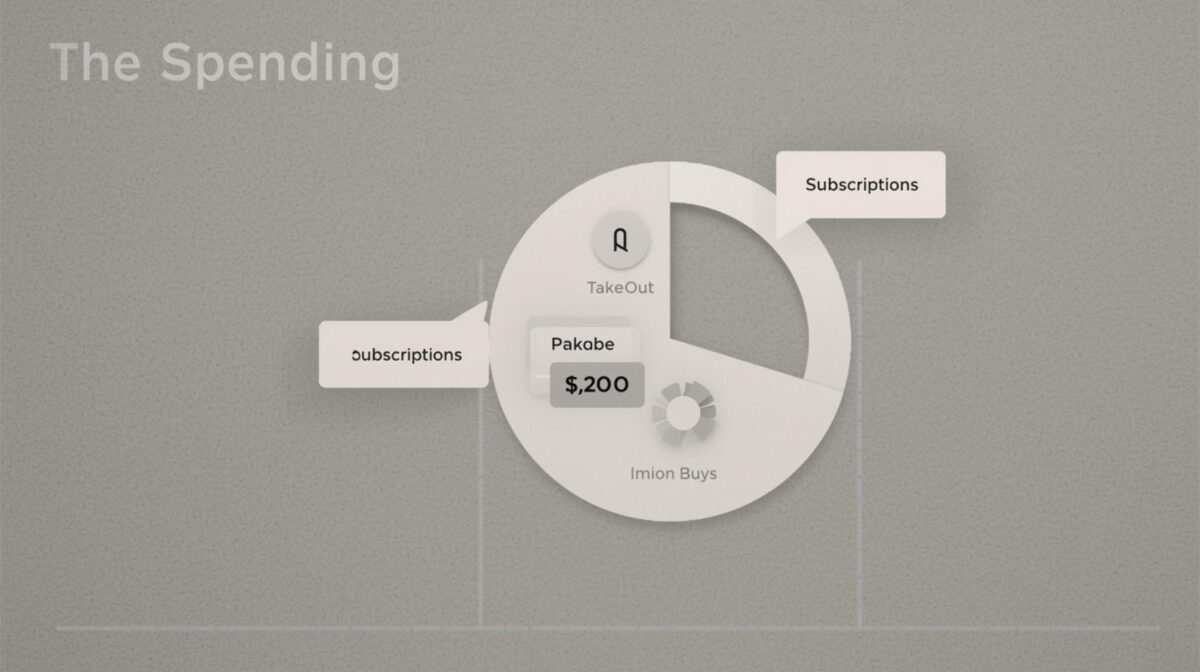
The “Weekly Money Sweep” acted like a truth serum for my finances. The biggest culprit was convenience food. The “latte factor” was real, for example. A $6 coffee five times a week is over $1,500 a year, which is enough for a serious investment. The second leak was subscription creep. Fueled by free trials, I had a dozen recurring charges for services I barely used. Finally, there was emotional spending, driven by the sophisticated machine of targeted advertising. Late-night “boredom shopping” on Instagram and “I deserve this” splurges after a tough day were my downfall.
Pro-Tips for Plugging the Leaks
My pro-tip for food is the 5-Minute Meal Plan. Every Saturday, I take five minutes to plan just three dinners for the upcoming week and list the ingredients. This simple act drastically reduces the “what’s for dinner?” stress that leads to expensive food delivery. For subscriptions, you can use a subscription audit service like Rocket Money. This can help you identify and cancel these forgotten expenses. For impulse buys, it’s best to curate your feeds. Unfollow accounts that trigger your spending impulses. In addition, you should replace them with accounts focused on your hobbies, goals, or financial education. Recognizing these patterns was the first step. The sweep forced me to confront the true cost of these habits. As a result, it empowered me to adopt a lifestyle of conscious consumption.
Savvix: Set a Conscious Spending Goal
Pick one of your spending confession categories (e.g., convenience food). Set a specific, achievable goal for the coming week, like “I will make my own coffee every weekday.” Track your success.
The Dopamine Hit of Saving: Why the Immediate Transfer is Key

The magic of the “Weekly Money Sweep” lies in the immediate, tangible action that follows: the transfer. This step is a powerful hack based on fundamental principles of behavioral finance. When you move the money you’ve “reclaimed” to your HYSA, your brain registers it as a concrete win. You get a small dopamine hit not from spending, but from saving. This act of paying yourself first transforms a moment of potential guilt into an act of empowerment. Furthermore, you are actively increasing your net worth in real-time. This immediate reinforcement creates a positive feedback loop that makes you want to find more leaks next week.
The Psychology of Positive Reinforcement
Another key concept here is friction. Most bad financial habits, like one-click online shopping, have very low friction, making them easy to do. In contrast, traditional saving often has high friction. The Money Sweep brilliantly reverses this. It adds friction to your mindless spending by forcing you to review it. At the same time, it removes friction from saving by making the transfer a simple, rewarding part of a weekly ritual. Over time, this changes your entire relationship with money. You start to see your HYSA balance grow, which is far more satisfying than the fleeting pleasure of an impulse purchase. This is the cornerstone of any successful long-term investment strategy.
Savvix: Name Your Financial Goal
Give your HYSA a specific, motivating name related to a major life goal, like “House Down Payment” or “Debt-Free Fund.” This visual reminder makes every transfer feel like a direct step toward your dream.
The Numbers Don’t Lie: Breaking Down My $287 Savings
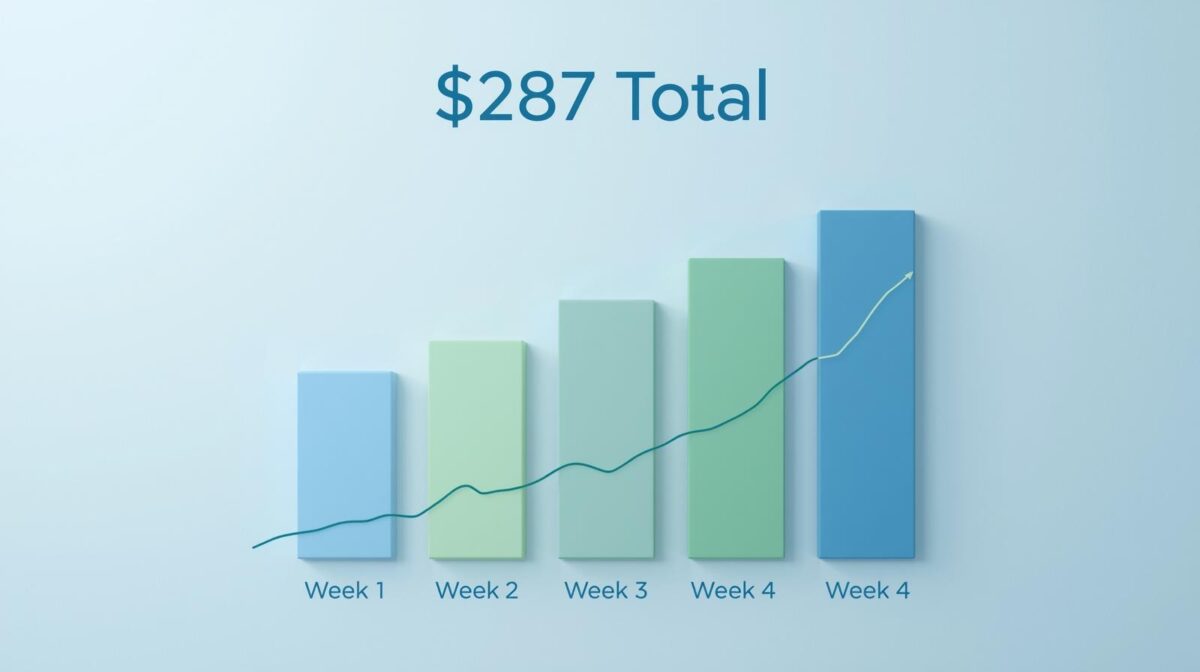
Here’s the unfiltered, week-by-week breakdown of my first month. For instance: * Week 1 Sweep: $81.50. This was the shock week, driven by multiple food deliveries and forgotten subscriptions. Week 2 Sweep: $72.00. A noticeable improvement. I was more mindful about lunch, choosing to do some meal prepping. Week 3 Sweep: $65.50. The trend continued downward. The habit was clearly influencing my daily choices. * Week 4 Sweep: $68.00. A slight uptick due to a social event, but still controlled. Total for the month: $287.00. This wasn’t magic money. It was my own hard-earned income that I successfully reclaimed.
The Power of Long-Term Projection
But the real power is in projection. At a conservative rate of $280/month, that’s $3,360 in a year. If I invested that amount annually into a low-cost S&P 500 index fund with an average historical return of 8%, after 10 years, that money could grow to over $52,000. This is thanks to the power of compound returns. This simple habit, started with a single weekly sweep, became the engine for my long-term wealth creation strategy. As a result, it was enough to fully fund my IRA contribution for the month, accelerate my debt reduction plan using the debt snowball method, and provide the confidence to start my journey towards serious investing.
Savvix: Start Your Progress Tracker
Create a simple note on your phone or a spreadsheet. Log your weekly sweep amount every Sunday. Watching this number grow over time is one of the most powerful motivators you can have.
More Than Money: The Long-Term Benefits of Financial Clarity

While saving nearly $300 was the immediate reward, the true value of the “Weekly Money Sweep” went far beyond the balance in my HYSA. The most profound change was the dramatic reduction in my financial anxiety. For the first time, I had genuine financial clarity. This newfound control is the very definition of financial wellness. Moreover, this simple habit served as a gateway to deeper financial literacy. Once my cash flow was under control, I had the mental bandwidth to finally create a real debt reduction plan for my student loans.
From Saving to Wealth Building
I started getting interested in more advanced topics that once seemed intimidating. I began researching how to improve my credit score, learning about different investment strategies, and exploring the world of passive income streams. The money I saved from the sweeps became my seed capital to start a small, diversified portfolio. This was primarily in low-cost index funds and ETFs. I even allocated a tiny portion to explore high-risk assets like cryptocurrency, purely for educational purposes. This habit also improved my communication with my partner about money. In short, it turned a source of stress into a topic of collaborative planning. It wasn’t just about plugging leaks; it was about building a solid foundation for long-term wealth building and pursuing the ultimate goal of financial independence.
Savvix: Invest in Your Financial Education
Use some of the money you “reclaim” next month to invest in your financial education. Buy a highly-rated personal finance book, subscribe to a reputable financial newsletter, or take an online course on investing basics.
Your Action Plan: How to Save Money Fast Starting Today

You have read my story, understood the psychology, and seen the results. Now, the power is in your hands. Achieving your financial goals, whether it’s building a six-month emergency fund to make your finances recession-proof or simply ending the cycle of living paycheck to paycheck, starts with a single, consistent action. The “Weekly Money Sweep” is that action. Indeed, it’s not a restrictive diet; it’s a sustainable ritual of awareness.
What to Expect on Your Journey
To help you visualize the journey, here is what you can expect: The First 30 Days: The Awareness Phase. This month will be full of shocks and discoveries. You’ll be surprised where your money goes. Don’t judge; just observe and execute the sweep. Your main goal is to simply build the habit. Days 31-60: The Optimization Phase. Next, you’ll start to see your weekly sweep amounts decrease, which is a sign of success! You will begin to proactively change your spending behaviors before the sweep, because you’re now more mindful. Days 61-90: The Automation Phase. Finally, by now, the ritual will feel second nature. Your savings will have a healthy balance, and your financial anxiety will be significantly lower. It becomes an automatic, empowering part of your life. The journey to saving your first $1,000 begins with the decision to reclaim your first dollar. You have the tools, you have the roadmap, and you have the ability. Start this Sunday.
Savvix: Create Your Accountability Pact
Commit publicly to your first month of the “Weekly Money Sweep.” Tell a trusted friend, family member, or partner about your plan. This simple act of creating accountability will dramatically increase your chances of success.
